

『Flow Meter Straight Pipe Requirements Manual: Eliminating Swirl and Distortion Errors』Related information(flow rotameter|digital flow meter|balo meter|hydraulic flow meter|volumetric meter|positive displacement meter|pitot tube flow meter|displacement meter|cfm meter|variable area flow meter|inline flow meter|differential pressure flow meter|calibrated flow meter|velocity meter|paddle wheel flow meter|oval gear flow meter|anemometer hvac|multiphase flow meter|doppler flow meter|thorpe tube flowmeter|heat flow meter)
Flow Meter Straight Pipe Requirements Manual: Eliminating Swirl and Distortion Errors
Quick Answer: Most flow meters need 5D to 50D of straight pipe upstream and 2D to 5D downstream depending on meter type and upstream disturbance. Swirl from elbows, valves, and pumps creates velocity profile distortion that causes measurement errors from 0.5% to over 10%. The fix is proper straight run installation or a flow conditioner when space is tight.
We have seen this on customer sites many times. A magnetic flow meter installed 3 diameters after an elbow reads 4% high. The customer blames the meter. They send it back for calibration. The calibration report says the meter is fine. The problem is swirl. This manual explains what straight pipe length you actually need and why it matters more than most engineers think.
Why Straight Pipe Length Matters
Flow meters measure velocity. Most meters assume a fully developed flow profile. That means the velocity distribution across the pipe is stable and predictable. A fully developed profile takes time to form. In a straight pipe it typically needs 20D to 40D after any disturbance. Disturbances include elbows, tees, valves, reducers, expanders, pumps, and even thermowells.
An elbow creates swirl. Swirl is a rotating velocity component that travels downstream and decays slowly. A partially open valve creates a jetting effect. The velocity is high on one side and low on the other. A reducer creates a flat profile or even a jet. All these distortions make the meter output wrong. The error can be positive or negative. It depends on the meter type and where the sensing elements sit in the flow stream.
Here is the thing. Different meter technologies have different sensitivity to swirl and profile distortion. An oval gear meter barely cares about upstream piping because it measures discrete volumes. A vortex flow meter is very sensitive because it counts vortices shed from a bluff body. If the incoming flow already has vortices or swirl, the meter counts them as its own signal. That is a real problem.
Straight Pipe Requirements by Meter Type
Coriolis Mass Flow Meters: Straight pipe is not required for accuracy. Coriolis meters measure mass directly by detecting the Coriolis force on vibrating tubes. Swirl does not change the mass measurement. But you still need pipe supports to reduce vibration and stress on the meter body. A common installation mistake is hanging a Coriolis meter from unsupported pipe. The stress changes the tube stiffness slightly and shifts the calibration. So no straight run requirement, but mechanical support matters.
Magnetic Flow Meters: Typically need 5D to 10D upstream and 2D to 3D downstream. Mag meters are less sensitive to swirl than vortex or turbine meters but they are still affected by velocity profile distortion. The electrode plane samples voltage across the pipe diameter. If the velocity is skewed, the voltage is skewed. A good rule is 10D upstream after any disturbance and 5D upstream after a control valve. Actually we recommend 10D after any control valve because a partially open valve creates strong jetting.
Vortex Flow Meters: Need 15D to 40D upstream depending on the disturbance. After a single elbow, 15D is usually enough. After two elbows in different planes, you need 30D to 40D. After a control valve, 30D minimum. Downstream straight pipe should be 5D. Vortex meters count vortices. Any pre-existing swirl creates false vortex shedding frequencies. This is the most common installation error we see with vortex meters on customer sites.
Ultrasonic Flow Meters: Transit time ultrasonic meters need 10D to 20D upstream and 5D downstream. Doppler ultrasonic meters are less sensitive but still need 10D upstream. The issue is that ultrasonic meters sample along specific acoustic paths. Distorted velocity profiles change the path average velocity relationship to the mean velocity. Multi path meters are more tolerant. Single path clamp-on meters need clean flow profiles to be accurate.
Thermal Mass Flow Meters: Need 10D to 15D upstream and 5D downstream. Thermal mass meters use insertion probes that sample at specific points. If the velocity profile is distorted, the point velocity is not representative of the mean. This is especially true for point insertion probes. A flow conditioner can reduce the requirement to 5D in tight installations.
Oval Gear and Positive Displacement Flow Meters: No straight pipe needed. Positive displacement meters measure discrete volumes. The measurement chambers fill and empty regardless of inlet swirl. This is a key advantage in skid mounted systems where space is limited. You can mount an oval gear meter right after an elbow or even a filter. It will still read accurately as long as the liquid is clean enough and the pressure drop is acceptable.
What Happens Without Enough Straight Pipe
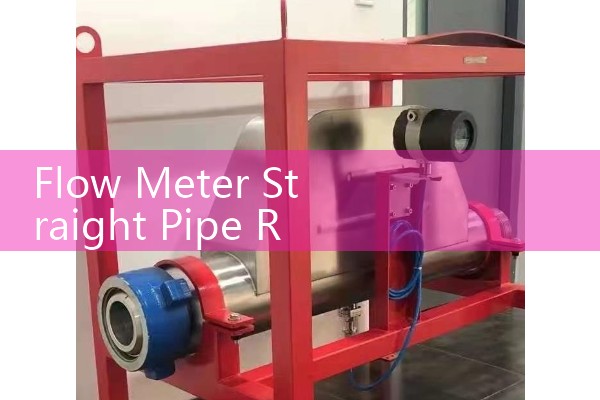
A customer in Vietnam bought a vortex flow meter for compressed air measurement last year. The installation had two elbows
In practice, most engineers skip this part during installation reviews. They look at pressure, temperature, and line size. They forget that the piping geometry upstream of the meter is part of the measurement system. A perfectly calibrated flow meter installed in bad piping will never read correctly.
Flow Conditioners as a Solution
When you cannot provide the required straight pipe length, a flow conditioner helps. Flow conditioners remove swirl and flatten the velocity profile. They are perforated plates or tube bundles installed upstream of the meter. They reduce the required straight run significantly. A good flow conditioner can reduce the upstream requirement to 5D or even 3D in some cases.
But flow conditioners add pressure drop. They also add cost and a potential clogging point. For clean liquids and gases, they work well. For dirty fluids, slurries, or liquids with solids, a tube bundle flow conditioner can clog or accumulate debris. We only recommend flow conditioners when there is no other choice.
At Silver Automation Instruments, we help customers size and select the right flow meter for their specific installation. We ask for pipe size, straight run availability, fluid properties, and the piping geometry upstream and downstream of the meter location. This helps us recommend whether a standard meter works or whether you need a flow conditioner or a different meter technology.
Installation Best Practices
Measure the straight pipe availability in your plant before you order a flow meter. Do not assume you have enough. We have seen plants where the only available location for a meter was right after a pump discharge. That location will not work for most meter types regardless of the meter quality.
For new installations, plan the meter location during the piping design phase. Add the required straight run into the layout. It costs nothing to add straight pipe during design. It costs a lot to rework piping after commissioning finds measurement errors.
For retrofit projects, check the existing piping carefully. If you have 10D of straight run and you want to install a vortex meter that needs 30D, you have three choices. Use a different meter technology that tolerates shorter straight runs. Use a flow conditioner. Or rework the piping. The cheapest option is often changing the meter type. A Coriolis meter or oval gear meter has no straight run requirement. A mag meter might only need 5D.
Control valves deserve special attention. A control valve that operates at 30% to 50% open creates strong jetting and turbulence. The flow downstream is chaotic. Do not install any velocity sensing flow meter directly after a control valve. Put the meter upstream of the control valve when possible. If the meter must be downstream, provide at least 30D of straight run or use a flow conditioner.
Common Questions from Customers
One question we get often is whether pipe reducers count as disturbances. Yes they do. A reducer changes the velocity profile. An expander does too. The straight pipe requirement applies after reducers and expanders just like after elbows. If you need to install a DN50 meter in a DN80 line, provide the full straight run after the reducer on the meter size piping.
Another common question is about vertical installations. Vertical pipe with upward flow tends to have a more stable flow profile than horizontal pipe because gravity helps distribute the flow. But vertical installation does not eliminate the need for straight pipe after elbows or valves. It helps but does not replace the straight run requirement.
Send us your pipe size in DN, your available straight run in mm, the fluid type, flow range, pressure in bar, and temperature in Celsius. We will tell you which flow meter works for your installation and whether you need a flow conditioner. Our contact details are below.
Tel: +86-25-68650347
Whatsapp: +86-25-52155837
WeChat: +86 15365082610
FAQ
Q: What is the minimum straight pipe for a magnetic flow meter?
A: 5D to 10D upstream and 2D to 3D downstream. After a control valve use 10D upstream. After two elbows in different planes use 10D or add a flow conditioner.
Q: Does a Coriolis flow meter need straight pipe?
A: No. Coriolis meters do not need straight pipe for accuracy. They measure mass directly. Provide proper pipe supports to minimize stress on the meter body.
Q: What flow meter has no straight pipe requirement?
A: Coriolis mass flow meters and positive displacement meters like oval gear flow meters have no straight pipe requirement.
 Hot News
 Related AD