

『Asphalt Flow Meter 4 Inch: Maintaining Proper Insulation Jacket Temperatures』Related information(flow rotameter|digital flow meter|balo meter|hydraulic flow meter|volumetric meter|positive displacement meter|pitot tube flow meter|displacement meter|cfm meter|variable area flow meter|inline flow meter|differential pressure flow meter|calibrated flow meter|velocity meter|paddle wheel flow meter|oval gear flow meter|anemometer hvac|multiphase flow meter|doppler flow meter|thorpe tube flowmeter|heat flow meter)
Asphalt Flow Meter 4 Inch: Maintaining Proper Insulation Jacket Temperatures
Quick Answer
Keep the insulation jacket on a 4-inch asphalt flow meter between 150 °C and 180 °C. A PT100 sensor with 4-20 mA HART output gives you tight control so the bitumen never cools below its pumpable point. Silver Instruments builds oval gear and Coriolis meters with factory-fitted heating jackets that eliminate cold spots common with field-wrapped tracing.
Why Jacket Temperature Is Not a Setting You Guess
Asphalt turns from a workable liquid to a sticky plug faster than most site teams expect. At 135 °C many penetration-grade bitumens start to lose pumpability. By 110 °C the viscosity can climb past 5,000 cP, enough to stall a positive displacement meter or shear a rotator shaft. Here is the thing: a 4-inch line does not hold much volume and cools quickly at night or during a rainstorm. In practice we have seen meters locked solid in less than 40 minutes after a heater contactor failed. The insulation jacket is not a comfort feature. It is a production uptime tool.
Most engineers skip the step of mapping the jacket temperature profile along the meter body. The inlet flange might read 160 °C while the outlet flange drops to 132 °C, creating a viscosity gradient inside the measuring chamber. That gradient destroys repeatability. A uniform jacket temperature paired with a fast-response PT100 inserted directly in the meter housing prevents this. Silver Instruments pre-machines a thermowell pocket so the sensor tip sits 3 mm from the flow path. You get real fluid temperature, not a lagging metal skin reading.
Field Temperature Data from a 4-Inch Asphalt Meter
A paint and waterproofing plant in Thailand runs two 4-inch oval gear meters on oxidized bitumen at 12 m³/h. Their jacket controller is set to 168 °C with a 3 °C dead band. Incoming bitumen arrives at 175 °C from a holding tank. On a day with 38 °C ambient, the heater cycles roughly 12 times per hour. The meter body temperature recorded by the PT100 never drifts outside 167.5 °C to 168.8 °C across a 24-hour shift. The plant manager told our service engineer that before switching to a factory-jacketed meter from Silver Instruments they lost a meter every rainy season. The previous field-wrapped heater tape created a hot spot right under the register, warping the oval gear set.
A customer in Oman uses a 4-inch Coriolis meter with a steam jacket on polymer-modified bitumen. Their jacket temperature setpoint is 172 °C. Viscosity stays near 2,800 cP. The meter measures mass flow and density directly, so temperature compensation is automatic. They send us a screenshot of the trend almost every month. No zero drift after 14 months.
Silver Instruments Flow Meters with Built-In Jacket Options
We ship 4-inch oval gear meters under the OGF-DN100 series with a welded carbon steel or stainless steel jacket. The jacket is rated for 10 bar steam or thermal oil. Electric heater cartridges with an ATEX Zone 1 certification are also available. The meter outputs 4-20 mA HART, pulse, and Modbus RTU, so you can feed the jacket temperature PV straight into a DCS or a local PID controller. Our Coriolis mass flow meters for asphalt come with the same jacket design and add density and temperature-compensated mass flow in kg/h without needing a separate
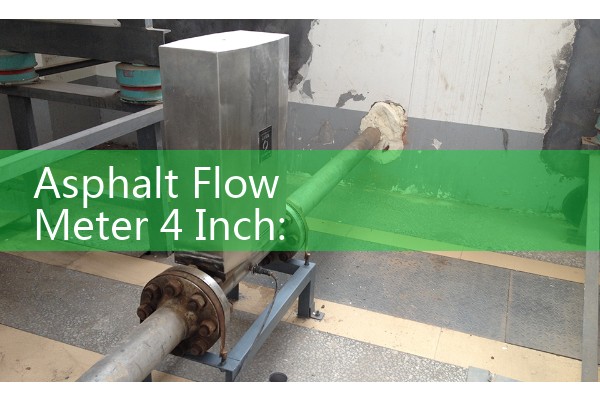
Because asphalt applications vary from AC-10 cutback to hard paving grade bitumen, we do not stock one preset jacket temperature for every job. Send us your operating temperature in °C, normal viscosity in cP, pipe size DN, and whether you need electric or steam tracing. We recommend a meter body material and jacket wattage that matches your startup time requirement. For a 4-inch meter with a target 180 °C jacket, warm-up from 30 °C ambient to setpoint takes about 25 minutes with a 1.2 kW electric cartridge. This matters when you batch only a few hours per day.
Installation Habits That Preserve Jacket Temperature
Insulate the connecting flanges and the first 300 mm of upstream and downstream pipe. We still walk onto sites where the meter jacket is running at 170 °C but the bare metal flanges act as a heatsink, dropping the fluid boundary temperature 20 °C. The result is a layer of high-viscosity bitumen clinging to the measuring element. Use calcium silicate or mineral wool jacketing rated for the jacket surface temperature. Keep insulation thickness at least 50 mm for outdoor installations in windy areas. A wind speed of 5 m/s can strip 15 °C off an uninsulated meter body in under an hour.
Position the PT100 downstream of the measuring element, not upstream. The upstream flow is still mixing from the pipe wall boundary layer. The downstream position reads a fully mixed temperature, which is what your controller needs to decide if more heat should be injected into the jacket. This small tweak reduced setpoint hunting in a Vietnam asphalt terminal from 6 °C swings to under 2 °C.
Frequently Asked Questions
What temperature should I set for a 4-inch asphalt flow meter jacket?
Set the jacket between 150 °C and 180 °C depending on the bitumen grade. Harder paving grades need the upper end, while cutback grades can stay near 150 °C. Always verify viscosity at the target temperature with your lab data.
Can Silver Instruments supply a flow meter with an integrated heating jacket for asphalt?
Yes. Our OGF series oval gear meters and Coriolis mass flow meters are available with electric or steam jackets in sizes from DN15 to DN150, including 4-inch DN100. The jacket is factory-welded and pressure-tested.
Which flow meter technology works best with an insulation jacket on asphalt?
Oval gear meters handle viscosity well and are cost-effective. Coriolis mass flow meters add direct mass measurement and density monitoring. Both technologies accept a jacketed body without affecting accuracy if the jacket keeps the chamber temperature uniform.
How do I specify my heating requirements for a quote?
Send us your fluid composition, normal operating temperature in °C, required jacket setpoint, available heating medium (electric, steam, or thermal oil), and pipe size DN. We select the jacket design and wattage so you reach ready-to-measure condition in your startup window.
What happens if the insulation jacket temperature drops below the setpoint?
The asphalt viscosity rises fast. Below 130 °C many grades become unpumpable inside a 4-inch meter, causing high pressure drop and possible mechanical damage. The meter can stall and require a complete disassembly and hot-oil flushing.
 Hot Product
 Related AD